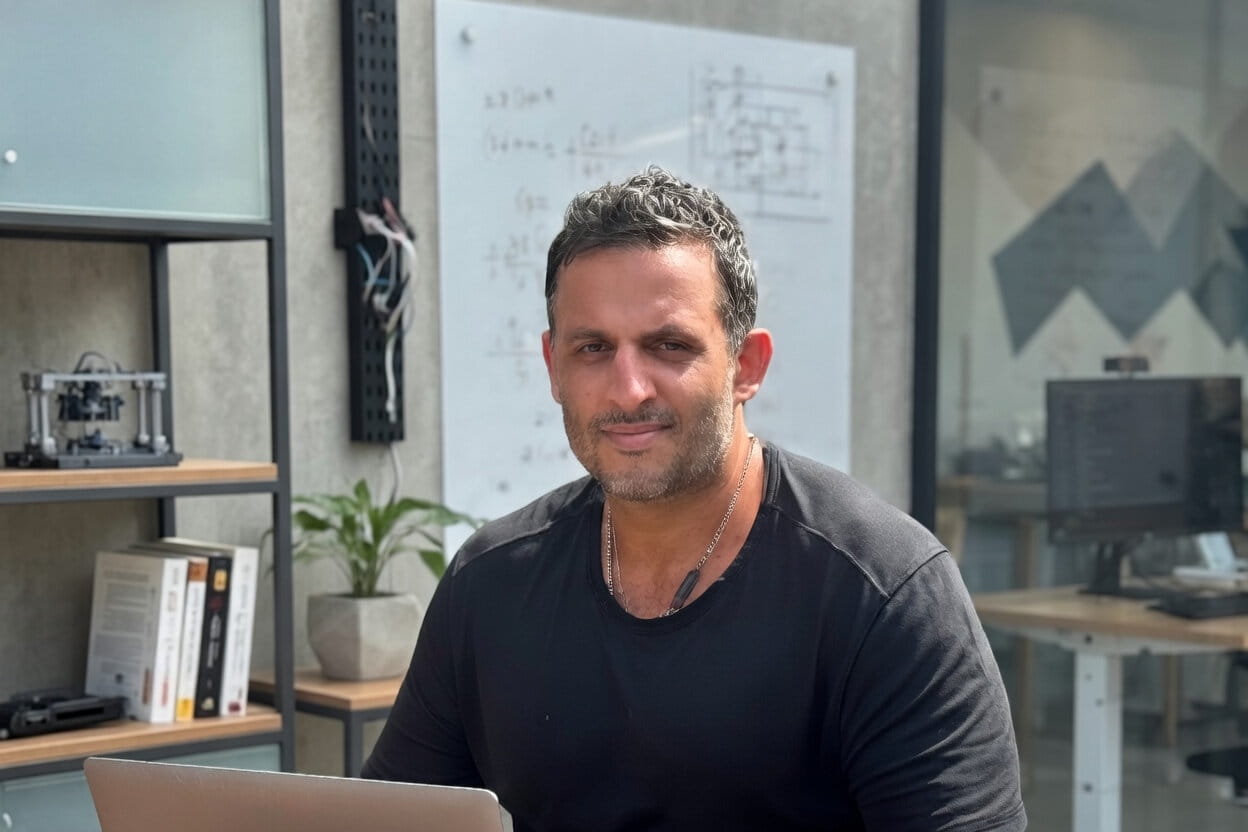
The kyiv sourcing program first cohort stands as a concrete milestone for Foundation, gathering ambitious builders who live and work in Ukraine's capital and who now receive structured pathways into product validation, customer discovery, and capital readiness. Selection emphasized durable ideas over flashy pitches, filtering hundreds of applications down to a compact group ready for hands-on acceleration rather than abstract theory.
How Scouts Pinpointed the Opening Batch of Ukrainian Builders
Scouts embedded in Kyiv universities, tech coworking floors, and defense-adjacent maker spaces spent months mapping under-the-radar teams. They looked for founders who had already shipped early prototypes, secured paying pilot users, or solved operational pain points created by wartime logistics. Conversations stayed informal yet rigorous, testing whether candidates could articulate unit economics without slides. Those who advanced demonstrated both technical depth and the stamina to iterate under constraint. The final list reflects grit more than résumé polish, a deliberate choice that aligns with Foundation's preference for operators who thrive when resources are scarce.
Outreach also pulled from alumni networks of coding bootcamps and open-source communities that remained active despite blackouts and air-raid interruptions. Reviewers scored candidates on evidence of customer conversations already completed, not merely planned. One standout team had reengineered agricultural sensors for battlefield reliability; another rebuilt payment rails that function offline for hours. These concrete proofs, not vague vision statements, secured places in the group.
Key Sectors Represented Among the Selected Entrepreneurs
Defense-adjacent dual-use technologies form one cluster, spanning secure communications, logistics tracking, and rapid prototyping tools that can serve both military and civilian markets. Agritech solutions optimized for disrupted supply chains make up another segment, including low-power sensors and modular processing units that keep farms operational when traditional infrastructure falters. Fintech experiments focused on resilience, such as multi-currency wallets that settle without constant connectivity, round out the mix. Healthcare diagnostics that run on portable hardware also appear, reflecting local demand for tools that function far from hospitals.
No single sector dominates, yet each shares a bias toward capital-efficient models that can reach break-even without massive early raises. Reviewers avoided pure software-as-a-service plays that ignore Ukraine's unique constraints of energy volatility and talent mobility. Instead they favored hybrid hardware-software combinations that create defensible intellectual property. Founders in these areas can later seek protection through the US Patent and Trademark Office once products mature, ensuring their inventions travel beyond regional borders.
Immediate Onboarding Steps After Formal Identification
Within days of acceptance, each founder receives a dedicated operator mentor who has scaled a company past Series A in comparable environments. Onboarding includes a rapid diagnostics session that maps current product gaps against real customer feedback already collected. Participants then draft a ninety-day experiment plan with clear kill criteria, so weak hypotheses die quickly rather than consume runway. Legal and compliance primers follow, covering entity formation choices and basic securities awareness drawn from guidance issued by the US Securities and Exchange Commission.
Peer circles form immediately so that co-founders can exchange war stories about hiring under pressure or securing cloud credits when payment cards fail. Weekly office hours give access to specialists in growth loops and distribution partnerships. Documentation stays lightweight: one shared dashboard tracks experiments, burn rate, and milestone progress. The goal is momentum, not bureaucracy. Founders who complete this phase gain priority access to the broader Foundation platform, where they can book additional expert sessions and surface their progress to partner investors.
Resource Commitments Extended by Foundation to These Teams
Each member of the group obtains a modest but non-dilutive cash stipend sized to cover three months of core living and tooling costs, freeing attention for product work rather than side gigs. Cloud and tooling credits follow, negotiated at volume rates so that compute-intensive models become affordable. Foundation also underwrites travel for one international demo day per founder, removing a classic barrier for Ukrainian teams. Access to design partners in adjacent markets helps validate export potential early.
Intellectual property clinics pair founders with counsel who understand both Ukrainian registration paths and international filing strategies. Soft skills modules cover investor storytelling that avoids trauma tourism and instead highlights technical differentiation. The package deliberately mirrors support structures proven in other dense founder hubs. Readers curious about parallel ecosystems can explore Why Tel Aviv Produces a Disproportionate Share of Rare Genius for comparative lessons on density and urgency. Further reading on program evolution sits in the News archive.
Local Operating Conditions That Shape Daily Progress
Electricity schedules and internet intermittency force founders to design products that degrade gracefully. Many already run generators or satellite backups as standard practice, turning adversity into a product feature rather than a complaint. Talent remains abundant yet mobile; several teams retain engineers who split time between Kyiv and temporary safer cities. Rental office markets have stabilized enough that shared labs with reliable power now exist, reducing the need for fully remote setups. Customer interviews often happen in person with enterprises that continue operating under blackout conditions, giving unusually honest feedback loops.
Supply chain improvisation has become a competitive skill. Founders who source components through multiple informal channels outperform those locked into single vendors. This reality colors every experiment plan and investor conversation. External benchmarks from the OECD SME and entrepreneurship workstreams help place these adaptive practices in a global policy context without romanticizing hardship.
Integration Paths into Foundation's Wider Support Network
Successful completion of the first ninety days unlocks eligibility for the Foundation Incubator Launches Permanent Partnership Model, converting temporary program status into multi-year collaboration. America-based specialists, whose ranks expanded after the Foundation Incubator's America Team Doubles in Six Months, now allocate dedicated hours to these Kyiv teams for US go-to-market coaching. Cross-cohort events introduce the group to founders from earlier European and North American intakes, creating peer accountability that outlasts formal program timelines.
Investor introductions remain invitation-only and data-driven; only teams that hit predefined traction thresholds receive warm handoffs. Foundation publishes anonymized progress snapshots so later applicants can calibrate expectations. Deeper institutional context appears on the About page, while ongoing reflections and founder interviews live on the Blog. The architecture prioritizes long-horizon relationships over short program cycles.
Evaluation Metrics Applied to the Group Over Twelve Months
Core metrics stay deliberately simple: number of paying customers acquired outside the domestic market, weeks of runway remaining after stipend burn, and documented experiments that either double a conversion rate or kill a failing feature. Secondary indicators track retention of key engineers and successful patent or trademark filings initiated. Quarterly reviews surface both quantitative deltas and qualitative learning, with underperforming hypotheses retired without stigma. Aggregate program health is measured by the percentage of teams that secure follow-on capital or reach sustainable revenue within the year.
No vanity dashboard inflates activity. Founders report only numbers they themselves use to decide next product moves. External validation arrives when independent operators or customers advocate for the companies unprompted. This discipline keeps the kyiv sourcing program first cohort focused on durable outcomes rather than optics. Continuous refinement of the scoring model ensures future intakes benefit from the patterns observed in this initial group.
Related Foundation reading: For mentors, Why Legal Infrastructure Comes Before Product Infrastructure, Tel Aviv After the Exit Boom: Where the Next Genius Comes From, Contract Negotiation Basics for Founders: Case Studies from Three Mark, and Biotech Diligence Timelines for Early Investors: City Pair Analysis fo.
Timeless Value. Perpetual Legacy.