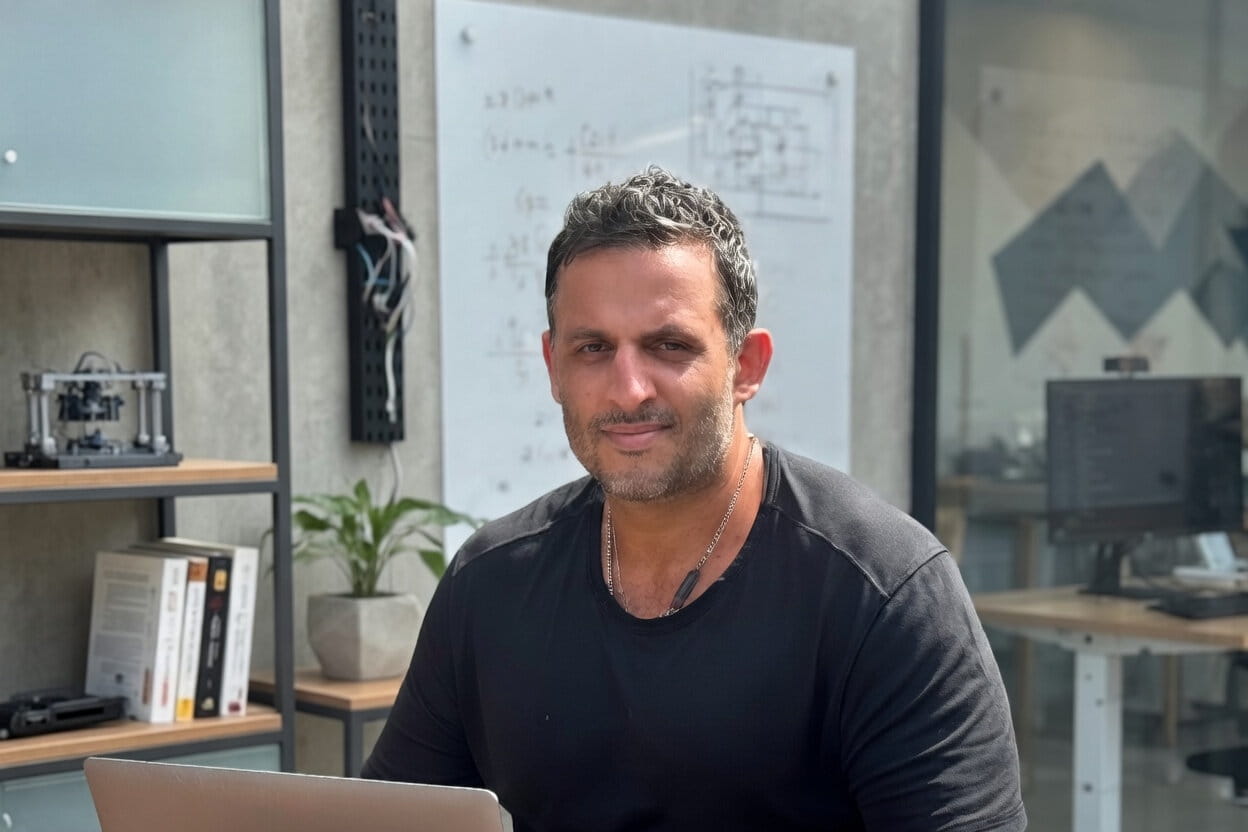
University laboratories hold more than published papers and grant reports. They hold people who already solve hard problems under pressure, often without calling themselves founders. A new discovery program in university labs now treats that quiet work as the first signal of company building talent rather than an afterthought.
The effort sits inside the broader mission of Foundation to connect rigorous research settings with practical startup pathways. Readers who want the larger institutional story can explore the About page, while day to day updates appear across the Blog and the News archive.
Campus Benches as Early Talent Maps
Walk through any active lab and the patterns appear quickly. Someone redesigns an experiment overnight because the first protocol failed. Another person teaches three undergrads how to run a machine that still lacks a manual. A third keeps a shared notebook so clean that new members can pick up midstream. These habits map directly onto the skills early stage companies need.
Traditional recruiting rarely reaches these rooms. Job fairs favor polished résumés. Pitch competitions favor confident speakers. The discovery program in university labs begins earlier by watching how people behave when no audience is present. Selection teams spend time inside the research groups themselves, listening to how students and postdocs describe setbacks and next steps.
That presence changes what gets noticed. A materials scientist who quietly improved yield by twelve percent without a press release may never enter a business school classroom, yet that same person already understands iteration, measurement, and resource limits. Those traits matter more than a slide deck at the earliest stage.
Signals That Matter More Than Titles
Degrees and journal names still open doors, yet they rarely predict who will build something that survives first contact with customers. The program looks instead for evidence of ownership. Did the candidate invent a workaround when equipment broke? Did they recruit peers to finish a multi month protocol? Did they rewrite their own methods after an unexpected result rather than defend the original plan?
Conversation style also counts. People who can explain a complex assay to a non specialist without jargon show they can later talk with users, suppliers, or early hires. People who only speak in acronyms often struggle once they leave the lab bubble. Scouts therefore spend as much time in ordinary hallway talk as they do in formal interviews.
International comparisons reinforce the approach. Work by the OECD SME and entrepreneurship unit shows that early stage firms grow faster when founders already possess deep domain knowledge and practical problem solving habits. University labs supply both in abundance if someone bothers to look carefully.
Daily Rhythm Inside the Discovery Track
Participants keep their research roles for the first months. The program does not pull them out of the lab and into a classroom full time. Instead it layers short, focused sessions around existing schedules. Morning meetings might last forty five minutes before experiments resume. Evening conversations often happen over coffee rather than in lecture halls.
Each session centers on one concrete question. How would a hospital actually buy the diagnostic method you just refined? Who else has tried a similar approach and what failed for them? What piece of your protocol could become a service rather than a product? Answers stay grounded in the work already underway so nothing feels abstract.
Mentors include former researchers who later built companies as well as operators who never set foot in a lab. The mix keeps advice realistic. When a chemistry postdoc worries that leaving the bench will erase years of training, someone who made the same jump can describe the first six months honestly. When a founder candidate undervalues their own data cleaning skills, an operator can show why clean data becomes a competitive edge.
Bridging Lab Language and Market Language
One of the hardest shifts is vocabulary. Inside a university the word “platform” might mean a shared instrument. Outside it often means a reusable technology base that supports many products. The program treats language translation as a teachable skill rather than a natural gift.
Participants practice rewriting their own research summaries for three audiences: a potential first customer, a technical co founder from another field, and a non technical partner who controls budget. Each rewrite must stay accurate. No hype is allowed. The exercise reveals which parts of the science actually create value and which parts, while elegant, remain academic curiosities.
Policy and regulatory awareness appears early as well. Teams that touch medical or financial data learn the basic contours of oversight from sources such as the US Securities and Exchange Commission so they avoid later surprises. Understanding the rules does not replace legal counsel; it simply prevents avoidable blind spots while ideas are still fluid.
From Selection to Ongoing Partnership
Discovery is only the first step. Once talent is identified, the relationship continues. Foundation does not treat the program as a one time contest with winners and losers. Selected people gain access to longer term structures that keep support available after the initial excitement fades. Details of that model appear in the announcement titled Foundation Incubator Launches Permanent Partnership Model.
Physical proximity helps. When teams need space for early prototypes or customer meetings, the recent expansion described in Foundation Incubator Opens Second Office to Support Growth provides rooms that stay available beyond a single cohort cycle. Continuity matters because university calendars and company calendars rarely match. A student who graduates mid year still has a desk and a phone number to call.
Five years of track record now exist. The retrospective piece Foundation Incubator Marks Five Years of Permanent Partnerships shows how earlier lab based teams matured once the handoff from discovery to sustained partnership was deliberate rather than improvised.
Why Global Innovation Patterns Favor This Approach
Across regions the same pattern repeats. Breakthrough ideas often surface first in universities, yet conversion rates into durable companies stay low when no one systematically watches the people doing the work. Reports from the World Bank innovation program repeatedly note that talent identification and early mentoring close the gap more effectively than large capital infusions alone.
Foundation’s platform therefore treats discovery as infrastructure rather than a seasonal campaign. The same infrastructure supports later stages through the Foundation platform, giving lab born teams a continuous path instead of a series of disconnected contests.
Founders who begin this way tend to retain scientific discipline longer. They measure, they document, they discard failed hypotheses without drama. Those habits reduce waste once real customers arrive. Investors notice the difference even if they cannot name it. Customers notice when products actually work as described.
What Prospective Participants Should Expect
Anyone currently deep in experimental work can begin by simply talking. No polished application package is required at the first conversation. Scouts want to hear what the candidate is actually doing this week, not what they plan to pitch next year. Honesty about uncertainty scores higher than confidence about untested claims.
Time commitment starts modest. Most people keep their lab responsibilities intact while testing whether company building language fits their temperament. Some discover they prefer staying full time in research; that outcome is treated as useful information rather than failure. Others realize they have already been acting like founders without the title and simply needed a clearer path forward.
Peer groups form around shared lab origins even when technologies differ. A synthetic biologist and a robotics postdoc may never collaborate on a product yet still compare notes on how to negotiate with university technology transfer offices or how to keep co founders aligned when one still has a thesis to finish. Those conversations reduce isolation that often kills early momentum.
The discovery program in university labs therefore does more than fill a pipeline. It changes who gets seen and when they get seen. It treats the people already solving difficult problems as the natural starting point for new companies. Over time that stance produces founders who understand both the science and the market because they never left the first for the second; they simply expanded the circle of what the science could become.
Related Foundation reading: Why Does Foundation Incubator Avoid Traditional Fund Cycles, Ecosystem Expansion Brings New Mentor Cohort Online, and Rituals that Improve Team Trust: What New Guidance Changes for Markets.
Timeless Value. Perpetual Legacy.